Image
Hazard
Air Quality
Air quality reflects the abundance of pollution present in air. Pollution is a mix of hazardous substances from both human-made and natural sources. Primary sources of human-made air pollution include vehicle emissions, fuel oils and natural gas to heat homes, by-products of manufacturing and power generation—particularly coal-fueled power plants—and fumes from chemical production.
Relevant Options
Grow partnerships between the public, private and nonprofit sectors to provide critical services to vulnerable populations in times of crisis.
Expand public, private and nonprofit partnerships to facilitate tree planting and nature-based solutions.
Evaluate and modify traffic patterns to reduce emissions in frontline communities.
Protect, maintain and expand the urban tree canopy.
Conduct an educational campaign about the health risks of wildfire smoke, the connection between smoke and heat and activity guidelines.
Support early maintenance and care of trees by building relationships and trust with community members.
Create and invest in strategic pre-disaster plans for post-disaster recovery.
Promote wider communication on air quality alerts.
Use a cooperative procurement process to purchase trees in bulk, in partnership with nearby governments or other local organizations.
Coordinate education efforts about the best health practices during concurrent heat and smoke events.
Advocate for investing in cleaner and more accessible public transportation.
Develop a local funding mechanism (e.g., gas tax or tax increment financing) to provide dollars towards non-capacity transportation projects.
Increase the tree canopy by implementing urban forestry programs and changing ordinances to require less cutting and more vegetation.
Collaborate with healthcare providers to develop and promote a wildfire smoke exposure checklist. Educate providers who are unaware.
Work with utility companies to address local impacts of power operations.
Launch a “Green Alleys” program. The program could offer garden materials and help coordinate volunteer labor to residents wanting to convert neighborhood alleyways to green space or green infrastructure.
Develop policies to enhance the urban tree canopy in ways that protect pedestrians and bicyclists from heat and pollution exposure.
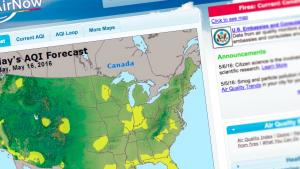
Make air quality measurements publicly available on a website and promote the use of the website.
Help connect low-income residents with existing weatherization programs. These programs often provide home insulation, water heater insulation, double-paned windows, thermostats, window coverings, fans
Expand employer and worker training in industries with outdoor work, including assurance for adequate water, shade and rest breaks, and protection from
Related Case Studies & Action Plans
Image
Photo attributed to Lazy Lightning. Incorporated here under the Creative Commons Attribution 2.0 Generic license. No endorsement by licensor implied.
Image
The Milwaukee Skyline in Smog, by Jeramey Jannene, via Flickr. Used via Creative Commons License CC BY 2.0.